Small Market, Big Dreams: America's Unexpected Multi-Sport Powerhouses
Forget everything you think you know about America's sports capitals. While everyone's focused on the Yankees and Lakers, some of the most compelling sports stories are unfolding in places you might not expect.
Nashville has the Predators selling out playoff games with the loudest arena in hockey. Oklahoma City turned a relocated basketball team into a perennial contender. Salt Lake City hosts world-class skiing, professional soccer, basketball, and hockey—all in a metro area smaller than San Antonio.
These aren't accidents. They're proof that the next great American sports city might not be where conventional wisdom says it should be.
The Nashville Blueprint
Twenty-five years ago, Nashville was known for country music and not much else in the sports world. Today, it's home to one of the NFL's most passionate fan bases, an NHL franchise that's redefined hockey culture in the South, and a Major League Soccer team that's become a model franchise.
The Titans transformed from Houston's castoffs into Tennessee's obsession. Nissan Stadium rocks on Sunday afternoons with a fervor that rivals any NFL venue. But it's the Predators who really showed what Nashville could do when it embraced a team completely.
Hockey in Nashville shouldn't work. The city has no winter sports tradition, no natural ice, and sits in a region where most people learned about icing penalties from watching playoff games. Yet Bridgestone Arena has become one of the most intimidating venues in professional sports, with fans who know every chant and never sit down during play.
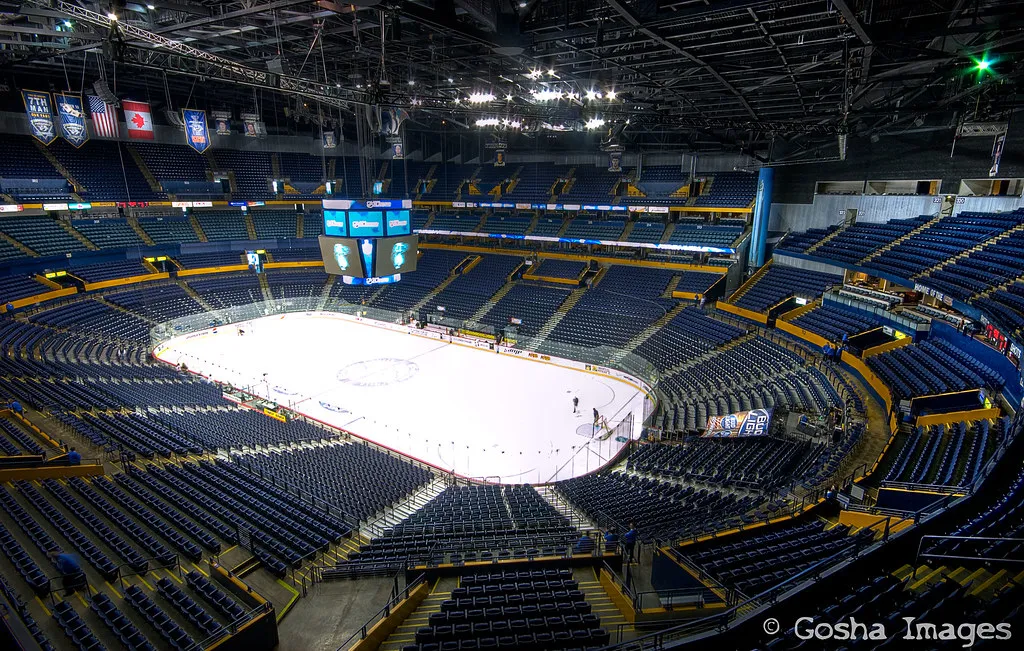 Photo: Bridgestone Arena, via c2.staticflickr.com
Nashville SC's arrival in MLS continued this pattern. The expansion team immediately became one of the league's best-supported franchises, proving that Nashville fans don't just adopt teams—they make them part of the city's identity.
Oklahoma City's Instant Transformation
In 2008, Oklahoma City was a one-sport town built around college football. The Thunder's arrival changed everything overnight.
What happened next was remarkable: a mid-sized Plains city embraced professional basketball with an intensity that shocked the sports world. The Thunder didn't just get fans—they got 400+ consecutive sellouts, playoff atmospheres during regular season games, and a community that treated Kevin Durant and Russell Westbrook like hometown heroes.
Even after Durant left and Westbrook was traded, the Thunder maintained their identity as a model small-market franchise. They've developed young talent, remained competitive, and kept their arena full. Oklahoma City proved that loyalty and smart management can compete with big-market advantages.
Salt Lake City's Quiet Excellence
Salt Lake City might be the most underrated sports city in America. The Jazz have one of the NBA's most dedicated fan bases, playing in an arena that gets legitimately loud. Real Salt Lake has carved out a strong MLS presence. The Utah Hockey Club (formerly the Coyotes) has found a passionate new home. And that's before mentioning the city's status as a winter sports capital.
What makes Salt Lake City special isn't just the number of teams—it's how the community supports them. Jazz games feel like community events. RSL matches draw fans who understand the sport and create genuine atmosphere. The city has proven that a smaller, tight-knit community can provide something big markets often can't: authentic, sustained passion.
The Small Market Advantage
These cities succeed because they offer something mega-markets often struggle with: unity of purpose. When Nashville rallies behind the Predators, the entire city gets involved. When the Thunder make the playoffs, Oklahoma City doesn't just watch—it becomes part of the story.
In New York or Los Angeles, teams compete for attention with countless entertainment options. In Nashville, Salt Lake City, or Oklahoma City, the local team becomes the entertainment. Game nights turn into city-wide events. Playoff runs become shared experiences that bring communities together.
Smaller markets also benefit from front offices that understand they can't waste opportunities. The Thunder's player development program has become legendary. The Predators built their franchise around creating the best possible fan experience. These organizations know they have to be perfect because they can't rely on market size to overcome mistakes.
The Next Wave
Which cities could join this group? Austin is adding professional soccer and could be ready for more. Las Vegas has proven it can support major league teams with the Golden Knights' instant success. Cities like Raleigh and Tampa have shown flashes of multi-sport excellence.
The key isn't population size—it's community engagement. Cities that embrace their teams completely, that make sports part of their identity rather than just another entertainment option, can compete with anyone.
Beyond the Numbers
What these mid-sized sports cities understand is that success isn't just measured in championships or revenue. It's measured in community pride, in bringing people together, in creating shared experiences that make cities feel more connected.
Nashville didn't need hockey to survive, but hockey has made Nashville more Nashville. Oklahoma City could have remained a college sports town, but the Thunder gave the city a new identity. Salt Lake City was already great, but its sports teams have made it feel more like home to more people.
The Big Picture
America's sports landscape is changing. While traditional powerhouses remain important, some of the most compelling stories are happening in places that were supposed to be afterthoughts. These cities have proven that passion, smart management, and community support can create something special.
The next time someone tells you that only big markets can build great sports cultures, point them toward Nashville's playoff atmosphere, Oklahoma City's Thunder Alley, or Salt Lake City's devoted fan bases. These cities aren't trying to be the next New York or Los Angeles.
They're busy being the first versions of themselves—and that might be even better.