Population 2,500 and a Dream: How America's Smallest Towns Are Producing Its Biggest Sports Heroes
Population 2,500 and a Dream: How America's Smallest Towns Are Producing Its Biggest Sports Heroes
Drive through Whitehouse, Texas (population 8,500) and you'll pass more cattle than sports complexes. Yet this tiny East Texas town produced Dak Prescott, the Dallas Cowboys quarterback who commands one of the NFL's biggest stages. His story isn't unique — it's part of a beautiful American tradition where the smallest dots on the map create the biggest names in sports.
The Geography of Greatness
While major cities boast elite training facilities and year-round competition, small-town America operates on something different: pure determination mixed with community investment. These athletes don't have access to $500-per-hour personal trainers or state-of-the-art recovery centers. What they do have is something money can't buy — an entire town believing in their dreams.
Take Baker Mayfield, who grew up in Austin, Texas (population 23,000). Before he was slinging touchdown passes in the NFL, he was the kid everyone in town knew by name. His high school games weren't just sporting events; they were community gatherings where the entire population showed up to watch their future star.
"In a small town, you're not just representing yourself," says former MLB All-Star Josh Hamilton, who hails from Raleigh, North Carolina (population 15,000 when he was growing up). "You're carrying the hopes of everyone who helped shape you."
When Disadvantage Becomes Advantage
The numbers seem stacked against small-town athletes. Limited resources, fewer opponents, less exposure — on paper, it looks like an uphill battle. But talk to these athletes, and they'll tell you those apparent disadvantages became their secret weapons.
Patrick Mahomes grew up in Whitehouse, Texas, where his father pitched for the MLB. But it wasn't the professional connection that shaped him — it was the small-town mentality that taught him to excel at everything. In towns where the same kids play football in the fall, basketball in the winter, and baseball in the spring, versatility isn't optional.
"I played every sport because that's what you did," Mahomes has said about his upbringing. "There weren't enough kids to specialize."
That multi-sport background shows in his game today. The arm angles he learned in baseball, the court vision from basketball, the pocket presence from having to do everything himself — it all traces back to those Friday nights under small-town lights.
The Coach Who Changes Everything
In small towns, the high school coach isn't just a teacher — they're often the difference between a kid staying local and reaching the professional level. These coaches wear multiple hats: talent scout, mentor, college recruiter liaison, and sometimes father figure.
Consider the story of Cooper Kupp, the Los Angeles Rams receiver who grew up in Yakima, Washington (population 96,000). His high school coach didn't just teach him routes; he filmed every practice, created highlight reels, and personally called college recruiters. In major cities, that's what agencies do. In small towns, it's what coaches do after their day job.
The Community That Never Forgets
Walk into any small-town diner across America, and you'll find the same thing: walls covered with newspaper clippings of local kids who made it big. These aren't just decorations; they're reminders that greatness can emerge from anywhere.
Cam Newton, who spent formative years in College Park, Georgia (population 15,000), still talks about returning home to find his high school jersey retired and his picture in the local McDonald's. "They made me feel like I was already a champion before I'd won anything," he's said.
This community support creates something unique: athletes who never forget where they came from because where they came from never lets them forget.
The Ripple Effect
When a small-town athlete makes it big, the impact goes far beyond individual success. Suddenly, every kid in town believes it's possible. Youth sports participation increases. Local businesses sponsor teams they never supported before. College recruiters start making stops they'd previously skipped.
Tim Tebow's success created a pipeline from his tiny Florida hometown to major college programs. Aaron Judge's rise meant every kid in Linden, California (population 1,800) started swinging for the fences with renewed belief.
Modern Challenges, Timeless Dreams
Today's small-town athletes face new challenges their predecessors didn't. Social media means constant comparison to big-city athletes with professional trainers and nutritionists. Travel teams and elite academies create pressure to leave home for better opportunities.
Yet the success stories keep coming. Josh Allen grew up in Firebaugh, California (population 8,000), where his high school didn't even have a football field with real grass. Today, he's leading the Buffalo Bills and proving that arm talent doesn't require a ZIP code with multiple digits.
The Heart of American Sports
These stories matter because they represent something fundamental about American sports: the belief that talent and determination can overcome any obstacle. In an era of super teams and mega contracts, small-town success stories remind us that sports, at their core, are still about kids with dreams and communities that believe in them.
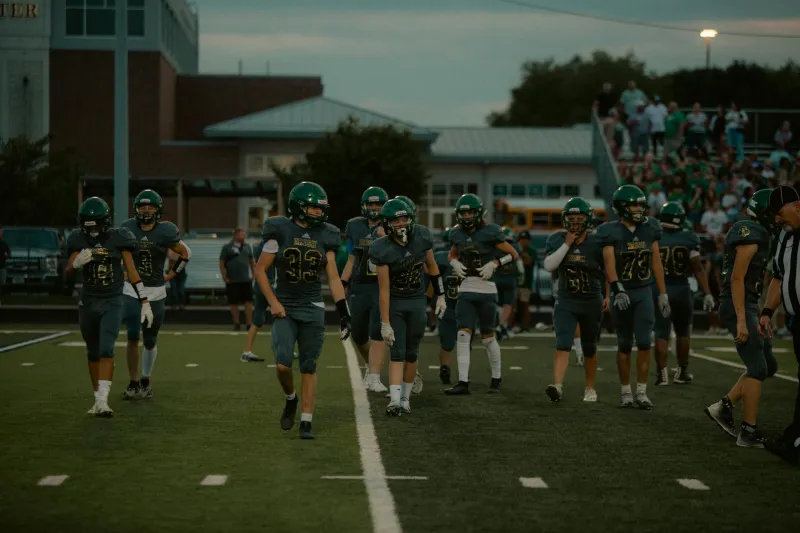
Every Friday night, under lights in towns you've never heard of, the next generation of small-town heroes is being forged. They're learning that greatness isn't about where you start — it's about refusing to let where you start define where you finish.
The next time you watch a professional athlete dominate on the biggest stage, remember: somewhere in small-town America, there's a community that's not surprised at all. They saw this coming from a mile away.