Famous Before Kickoff: The College Athletes Who Showed Up to the Pros Already a Brand
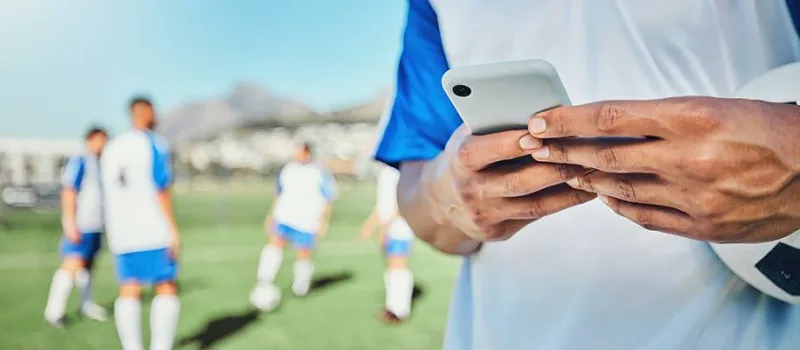
Photo: college athlete smartphone social media content creator sports, via images.collegexpress.com
Not long ago, the arc of an athlete's fame followed a pretty predictable path. You played college ball, maybe generated some regional buzz, got drafted, and then — if you were talented and lucky and worked hard enough — you became somebody people outside your sport actually recognized. Fame was a reward for professional achievement. You earned it by performing at the highest level.
That script has been completely rewritten.
Today, some of the most talked-about athletes in America haven't played a single professional game. They're still in college. They have sponsorship deals with national brands. They have millions of TikTok followers and Instagram audiences that dwarf those of established NFL and NBA stars. And when draft day finally arrives, franchises aren't just evaluating their vertical leap and their completion percentage — they're thinking about what this person means to their brand, their ticket sales, and their social media presence.
Welcome to the NIL era. Things are different now.
What NIL Actually Changed
The NCAA's decision to allow college athletes to profit from their Name, Image, and Likeness — which came into effect in 2021 — didn't just change the economics of college sports. It fundamentally altered the relationship between athletes, audiences, and commercial brands.
For the first time, a 19-year-old college quarterback could sign a deal with a fast food chain, launch a merchandise line, and build a content operation around his athletic career — all before he'd taken a snap in a professional league. The floodgates opened, and what poured through wasn't just money. It was visibility.
Athletes who might previously have been known only to devoted college football or basketball fans suddenly had pathways to national audiences. A viral practice highlight. A funny postgame interview clip. A behind-the-scenes training video that hit just right. The infrastructure for overnight celebrity now existed, and college athletes were learning to use it with startling speed.
The Players Who Built Empires Before Turning Pro
Bryce Young was perhaps the most prominent early example of what the NIL era could produce. Before he threw a single NFL pass, Young — the Alabama quarterback and Heisman Trophy winner — had already accumulated a NIL portfolio estimated in the millions, with deals spanning automotive brands, apparel companies, and technology partners. He arrived at the 2023 NFL Draft not as an unknown commodity but as a fully formed public figure with opinions, aesthetics, and a following that extended well beyond sports fans.
On the women's side, the story of Caitlin Clark is arguably the most dramatic illustration of social media-accelerated college stardom in recent memory. Clark's scoring exploits at Iowa were extraordinary on their own terms, but what amplified her into a genuine cultural phenomenon was the way those moments traveled online. Her deep threes — launched from absurd distances with a kind of joyful audacity — were custom-made for the highlight clip format. Every big game became a new wave of content. By the time she was drafted first overall by the Indiana Fever in 2024, she wasn't just a basketball player. She was a movement.
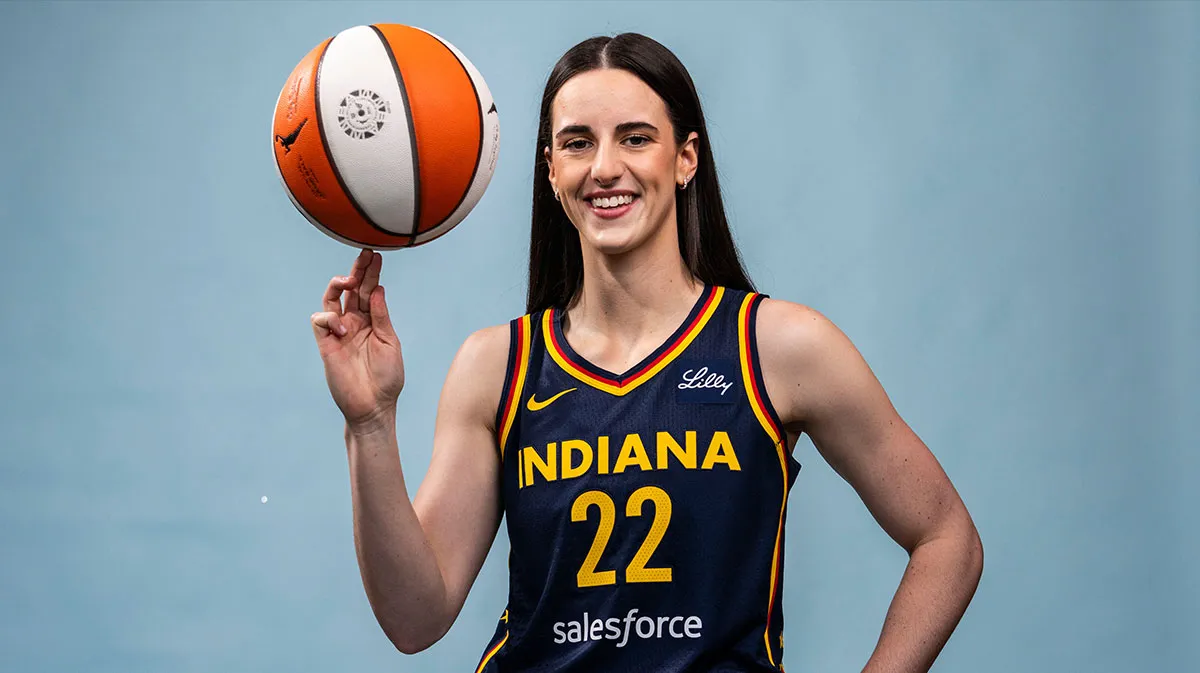 Photo: Caitlin Clark, via wp.clutchpoints.com
Then there's Arch Manning, who represents perhaps the most extreme case of fame preceding professional achievement in sports history. As the nephew of Peyton and Eli Manning and the grandson of Archie, Manning arrived at Texas with a lineage that guaranteed attention. But his NIL deals and social media presence have turned him into a household name while he's still learning the college game. Franchises across the NFL are already thinking about what his eventual draft entry means not just for their roster but for their entire organizational profile.
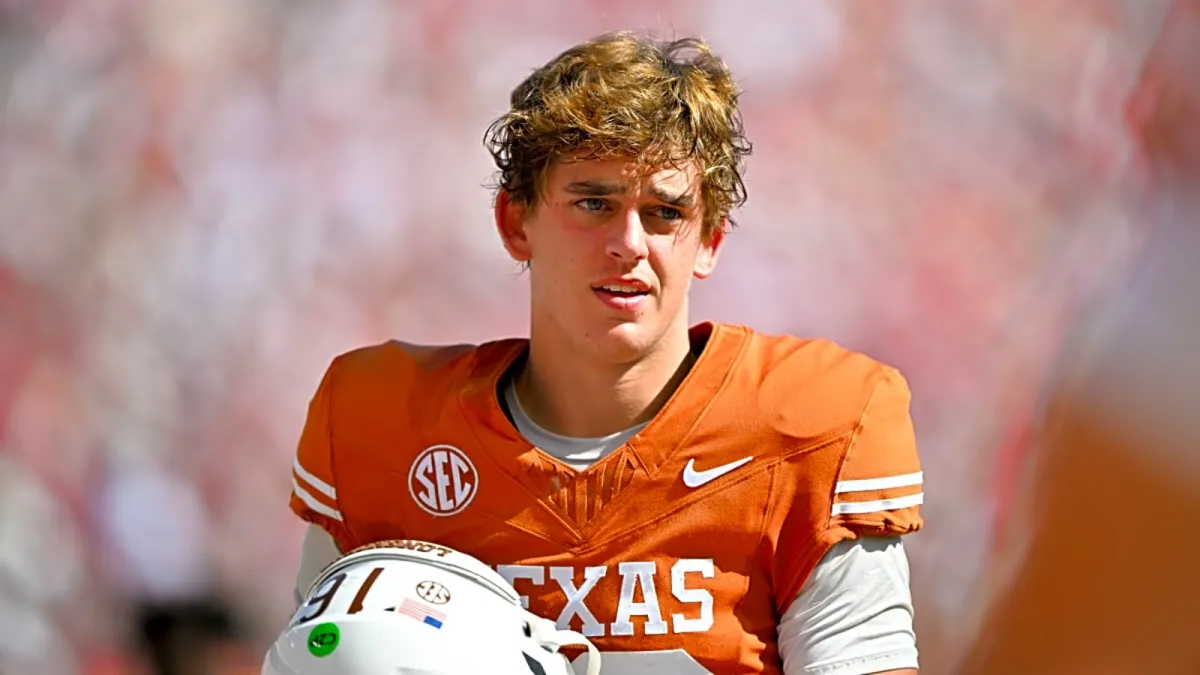 Photo: Arch Manning, via res.cloudinary.com
How Teams Are Factoring In the Follower Count
Here's where things get genuinely fascinating from a sports business perspective: professional franchises are increasingly treating social media presence as a legitimate part of draft evaluation.
This isn't about picking players based on Instagram numbers over athletic talent — the baseline physical requirements of professional sports don't bend for influencers. But when talent is relatively equal, when a team is deciding between two prospects with similar athletic profiles, the off-field commercial calculus is absolutely entering the conversation.
A quarterback who arrives with two million engaged followers represents something valuable beyond his arm talent. He sells jerseys from day one. He drives digital engagement. He brings existing fans into the building and generates media coverage that money can't buy. For smaller market franchises fighting for relevance in crowded media landscapes, a socially prominent rookie can move the needle in ways that a statistically superior but publicly anonymous player simply cannot.
Some teams have even begun hiring analysts specifically to evaluate athletes' digital footprints — engagement rates, content quality, audience demographics, brand alignment. The combine still measures your forty time. But someone is definitely also checking your TikTok.
The Double-Edged Sword of Early Fame
For all the opportunity that comes with arriving at the pro level already famous, there are real complications that the previous generation of athletes never had to navigate.
Expectations are front-loaded in a way that can be genuinely brutal. When a college athlete has spent two years being celebrated as the next great thing, the grace period that once existed for young professional athletes — the understanding that rookies need time, that development is nonlinear, that early struggles are part of the process — can evaporate entirely. Fans who followed you through your college highlights feel entitled to immediate returns. Social media criticism moves at a speed that no amount of mental preparation can fully ready you for.
There's also the question of focus. Building and maintaining a personal brand is a serious job. Content strategy, sponsorship obligations, social media management — for athletes trying to simultaneously master a professional sport, that's an enormous additional weight. The ones who figure out how to compartmentalize, how to protect their competitive preparation while keeping their public presence active, will thrive. The ones who can't find that balance may find that their brand outlasts their career.
The Creator Economy Meets the Draft Board
What's happening in college sports right now is genuinely unprecedented — a full collision between the traditional athletic development pipeline and the creator economy that has reshaped entertainment, commerce, and celebrity over the last decade.
The athletes navigating it best are the ones treating their public presence with the same discipline they bring to training. They're not just posting content. They're building something intentional, something that will survive a bad game or a rough season, something that connects with audiences on a human level beyond highlights and stats.
And the franchises watching closely aren't just evaluating whether a prospect can play at the next level. They're asking a new question — one that would have seemed bizarre even ten years ago: What does this person mean to the culture?
In 2025, that question might be just as important as anything that happens at the combine. And the college athletes who understood that first are already miles ahead.