Gone at the Peak: The Athletes Who Chose Life Over Legacy — and Why It Might Be the Boldest Move in Sports
Every athlete eventually leaves. The question is who gets to decide when.
For most professionals, the sport makes that call. The injuries pile up. The contract offers dry up. The minutes shrink. The exit is gradual, sometimes undignified, always bittersweet. It's the natural arc of athletic life, and fans have come to accept it as part of the deal.
But then there's the other kind of departure — the one that comes out of nowhere, when a player is still producing, still relevant, still capable of doing things that make arenas go quiet with disbelief. The retirement that drops like a thunderbolt. The announcement that breaks the internet on a Tuesday afternoon and leaves the sports world staring at its phone, reading the same sentence over and over.
These exits are rare. They're confusing. And they're arguably the most powerful thing an athlete can do.
When Barry Sanders Walked Out the Door
If you want to understand what a peak-power retirement looks like, start with Barry Sanders. In the summer of 1999, the Detroit Lions running back sent a letter to his hometown newspaper in Wichita, Kansas, announcing that he was done. He was 30 years old. He was 1,457 yards away from breaking Walter Payton's all-time NFL rushing record. He was, by almost every measure, still the most electrifying runner in professional football.
The reaction was somewhere between grief and disbelief. Detroit fans were devastated. Football analysts couldn't process it. And Sanders — famously private, famously uninterested in the machinery of celebrity — offered almost no explanation beyond a simple statement that the game no longer brought him joy.
Twenty-five years later, it remains one of the most debated exits in American sports history. Did he rob the record books? Did he rob the fans? Or did he do something genuinely radical — protect himself from the sport before the sport could take anything else from him?
Andrew Luck and the Courage to Say Enough
Few retirements in recent memory hit the sports world harder than Andrew Luck's in August 2019. The Indianapolis Colts quarterback was 29 years old and had just completed what looked like a full comeback from a serious shoulder injury. The Colts were building something real. Luck was healthy. And then, on the Saturday night before the regular season began, the news broke during a preseason game.
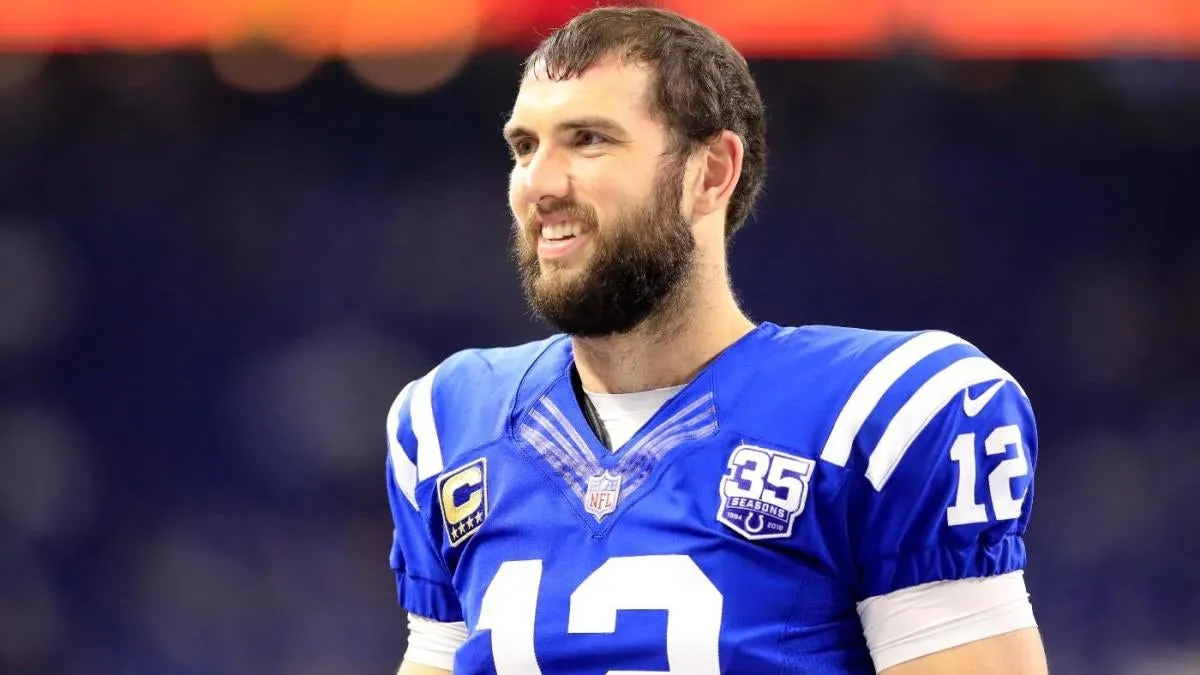 Photo: Andrew Luck, via sportshub.cbsistatic.com
Fans at Lucas Oil Stadium actually booed as Luck walked off the field — a reaction that, in the cold light of reflection, most people came to regret. What emerged in the days and weeks that followed was a picture of a man who had spent years grinding through pain, surgeries, and rehabilitation cycles that would have broken most people, and who had simply decided that he wanted his body — and his life — back.
Luck had every right to keep playing. He also had every right to stop. The fact that the second choice felt so shocking said something about how we relate to athletes — as entertainers we're owed something by, rather than as human beings making deeply personal decisions.
Calvin Johnson and the Weight of the Game
Megatron walked away from the Detroit Lions in 2016 at just 30 years old, citing the physical toll the game had taken on his body. Unlike some retirements that arrive with ambiguity, Johnson was direct: the NFL had cost him physically, and he wasn't willing to keep paying that price. He left as one of the most gifted wide receivers the game had ever seen, with records still standing and highlights that don't seem real even on repeat viewing.
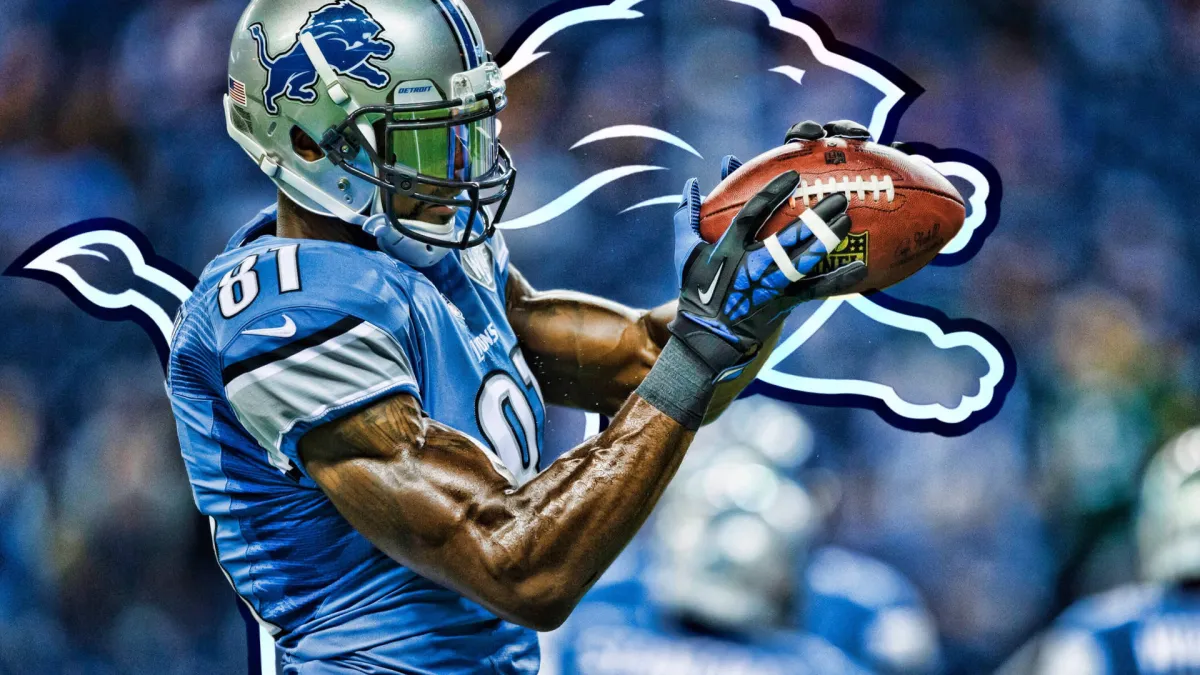 Photo: Calvin Johnson, via wallpapers.com
His retirement became part of a broader conversation about what the NFL asks of its players — and whether the financial rewards ever fully account for the long-term physical cost. Johnson's exit wasn't just personal. It was, in a quiet way, a statement.
The Women Who Set the Standard
Peak retirements aren't exclusive to men's sports. Aly Raisman stepped back from gymnastics at a moment when she was still a dominant force, choosing advocacy and personal wellbeing over the pursuit of another Olympic cycle. Abby Wambach retired from soccer at 35 after a World Cup victory, leaving on the highest possible note and transitioning into a career as one of sport's most compelling voices.
These decisions carry a particular resonance in women's sports, where the career windows are often shorter and the financial incentives to keep competing can be more complex. Walking away at the top requires a different kind of calculation — and a different kind of courage.
What Drives the Decision?
Athletes who retire at their peak rarely share a single motivation. For some, it's physical — the body has absorbed enough punishment, regardless of what the stats say. For others, it's mental and emotional. The grind of professional sports, the constant travel, the pressure, the loss of privacy — all of it accumulates in ways that outsiders rarely see.
And for a few, it comes down to something harder to articulate: a feeling that the game has given them everything it has to give, and that continuing would be chasing something that's already been caught.
Is Walking Away on Top the Ultimate Power Move?
There's an argument — a genuinely compelling one — that retiring at your peak is the most powerful thing an athlete can do. It means the final image the public holds of you is one of excellence. Nobody watches you decline. Nobody sees the diminished version. The highlight reel ends at full volume.
But there's a counter-argument too: that sport is about pushing limits, that records and championships matter, and that walking away leaves something unfinished that can never be reclaimed.
Both arguments are probably right. Which is exactly why these retirements keep generating conversation years and decades after the announcement.
Barry Sanders never broke Payton's record. Andrew Luck never won a Super Bowl. Calvin Johnson's body is in better shape than most of his contemporaries. Each of them made a choice. Each of them owns it.
In a world where athletes are constantly told to give more, play through more, sacrifice more — the decision to say this is enough, and it's mine might be the most athletic thing any of them ever did.