Playing for Payday: The Strange Psychology Behind Athletes' Best Seasons
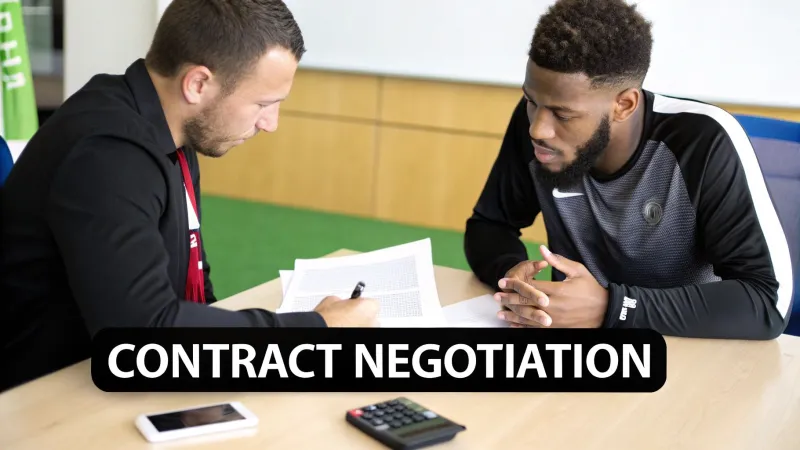
Photo: professional athlete signing contract sports deal, via cdn.outrank.so
There's a well-worn joke in professional sports: want to see a guy go absolutely nuclear on the stat sheet? Check when his contract expires. Suddenly the guy who averaged 14 points a game for three straight seasons is dropping 22. The wide receiver who disappeared for half a season is hauling in everything thrown his direction. The contract year phenomenon is real, it's fascinating, and it raises questions that teams, fans, and agents are still trying to answer.
So what's actually going on?
Money Changes Everything
Let's start with the obvious. When a player knows their next deal — potentially the biggest paycheck of their life — is riding on the next six to nine months of performance, human nature kicks in hard. The stakes couldn't be higher, and the brain responds accordingly.
"What we see in contract years is essentially peak motivation," says Dr. Renee Calloway, a sports psychologist who has worked with professional athletes across the NFL and NBA. "The brain's reward circuitry becomes hyperactivated. Athletes are more focused in film sessions, they're taking better care of their bodies, and they're competing with an urgency that's genuinely hard to replicate in other seasons."
That urgency is visible everywhere you look. Players who historically struggled with conditioning suddenly arrive at training camp looking like they spent the offseason living in the weight room. Veterans who had grown comfortable in rotation roles start staying late after practice. The motivation isn't manufactured — it's as real as it gets.
The Numbers Don't Lie — Or Do They?
A 2022 study examining NBA player performance across multiple seasons found that players in the final year of their contracts outperformed their own career averages in scoring, assists, and minutes played at a statistically notable rate. Similar patterns have been documented in the NFL, particularly among skill positions like running back and wide receiver.
But here's where it gets complicated. Agents — who have a financial stake in how this story gets told — are quick to point out that contract year spikes can be misleading.
"I've seen teams get burned by paying for one great year," says Marcus Tillman, a veteran sports agent who represents clients across multiple leagues. "A player has a monster contract year, gets a massive deal, and then settles right back into what he was before. The question teams have to ask is whether they're seeing a player who finally unlocked something, or a player who ran on adrenaline for eight months and can't sustain it."
It's a fair concern. The list of players who signed blockbuster extensions off the back of career years — only to regress almost immediately — is long enough to make any general manager nervous.
When It's Real and When It's a Mirage
Former NBA forward Darius Wren, who played 11 seasons across five teams, remembers his own contract year with unusual honesty. "I was averaging 11 points going into that year, and I finished averaging 18. Was I working harder? Absolutely. But I was also getting more shot attempts because my coach wanted to showcase me. The team was fine with it. My value was going up, which helped them in trade talks too. It's never just one thing."
Wren's point about team context is crucial and often overlooked. Some contract year performances are inflated by increased opportunity, not just increased effort. A team that knows a player is leaving at season's end sometimes feeds them touches deliberately — either to maximize trade value or simply because roster dynamics shift. Separating genuine improvement from a favorable environment is harder than it looks on a box score.
The players who tend to command — and deserve — top dollar after a breakout contract year are those whose improvements are rooted in tangible skill development rather than just circumstance. A quarterback who spent the offseason overhauling his footwork and shows dramatically improved accuracy on third downs? That's a real leap. A running back who posted big numbers behind a suddenly elite offensive line? Teams better look a little harder.
The Red Flag Debate
Here's the question every front office has to wrestle with: is a contract year spike a green light to pay up, or a warning sign to proceed with caution?
The honest answer is that it depends entirely on why the spike happened. Teams that do their homework — digging into practice habits, injury history, film tendencies, and locker room reputation — are far better positioned to make the call. Teams that simply react to a hot stat line are the ones who end up with expensive regrets.
Dr. Calloway argues that there's a middle ground worth considering. "The best athletes find ways to manufacture that contract year urgency even when security is in place. They set internal performance goals, they compete with themselves. If you're evaluating a player and you see evidence that they've done that in previous seasons — that they've been consistent even without external financial pressure — that's your answer. Pay them."
The contract year will always be part of professional sports. As long as paychecks are tied to performance, athletes will find another gear when the moment demands it. The real skill — for teams, fans, and the players themselves — is figuring out whether what you're watching is a genuine evolution or the most expensive eight-month audition in American sports.