Sign Here, Stay Healthy: Inside the High-Stakes Gamble on Injured Superstars
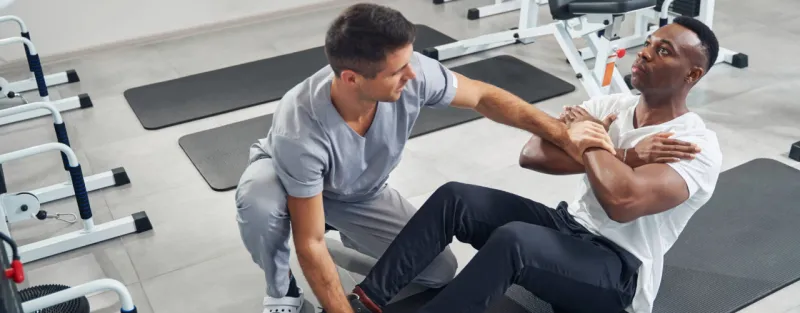
Photo: athlete rehabilitation physical therapy sports comeback training, via biosportphysicaltherapy.com
Somewhere in a team facility right now, a general manager is staring at a medical report on a player who has spent more time in a training room than on a field in the last three years. The player is undeniably talented — maybe elite, maybe even generational. The injury history is equally undeniable.
The GM signs him anyway.
This is the injury gamble, and it has become one of the most fascinating and divisive strategies in modern professional sports. Teams are routinely betting enormous sums — sometimes hundreds of millions of dollars over multiple years — on athletes whose bodies have already failed them once, twice, or more. Sometimes those bets pay off spectacularly. Sometimes they blow up in the most expensive ways imaginable.
Either way, the strategy isn't going away.
Why Teams Keep Making This Bet
The logic, when you strip it down, is pretty straightforward. Elite talent is finite. There are only so many players in any sport who can genuinely change the outcome of a game by their presence alone. When one of those players becomes available — even with a concerning medical file attached — the competitive calculus shifts.
For a franchise that believes it has a two or three-year window to compete, the question isn't really "is this risky?" The question is "what does our roster look like without this guy?" If the answer is "pretty ordinary," then the risk starts to look more acceptable.
There's also the sunk cost consideration working in the player's favor. A team that has already invested in a strong supporting cast, a capable coaching staff, and a reliable arena situation isn't going to let salary cap concerns stop them from completing the puzzle — especially if that final piece happens to be a superstar coming off knee surgery.
The Medical Revolution Driving Confidence
One reason teams are more willing to make these bets now than they were twenty years ago is that sports medicine has genuinely transformed the recovery landscape.
ACL tears, once considered career-altering events, are now routinely rehabbed back to full function within twelve to eighteen months. Tommy John surgery in baseball has become almost routine — some pitchers have had it twice and gone on to post All-Star seasons. Hip procedures, back surgeries, shoulder reconstructions — the success rates across the board have improved dramatically as medical technology, rehabilitation protocols, and sports science have advanced.
Front offices know this. They hire medical staffs that rival small hospital departments. They use imaging technology that can assess joint health at a granular level. They run biomechanical analyses that track how a player's movement patterns have changed post-injury. The information available to decision-makers today is exponentially richer than what existed a generation ago.
That doesn't eliminate the risk. But it does make the risk feel more calculated.
When It Works: The Comeback Stories
The success stories are the reason this strategy persists. When a team bets on a recovering superstar and it pays off, the upside is enormous — not just competitively, but financially and culturally.
A player who returns from serious injury to perform at or near their previous level becomes a story the sports world can't stop talking about. The comeback narrative is one of the most powerful in American sports culture. We love the fallen hero who gets back up. We love the comeback press conference, the first game back, the moment when it's clear the player is still the player.
For the team, a successful injury gamble can compress years of roster-building into a single offseason move. You don't have to develop a superstar through the draft, wait for them to peak, and hope the timing aligns with your window. You can just sign one — at a discount, often, because the injury history suppresses the market — and let the upside play out.
When It Fails: The Expensive Disasters
The failures, though, are spectacular in their own grim way.
A high-profile player who signs a massive deal and then can't stay on the field doesn't just cost money. They cost opportunity. Every year that contract sits on the books is a year the team can't use that salary space on someone else. Every game the player misses is a game the roster runs below its potential.
There's also the morale dimension. When a team builds its identity and its marketing around a returning superstar, and that player spends the season in the training room, the deflation affects everyone — the fanbase, the coaching staff, the other players who signed with that team partly because of who else was on the roster.
The NFL's guaranteed money structure makes these failures especially painful. Unlike the NBA, where contracts are fully guaranteed, NFL deals can sometimes be restructured or cut. But even partial guarantees on a $25 million annual salary for a player who plays six games a season can cripple a franchise's flexibility for years.
The Psychology of the Injured Superstar
There's a human dimension to this story that often gets lost in the financial analysis. The players on the other side of these bets are dealing with something genuinely difficult: the uncertainty of not knowing whether their body will cooperate.
The best of them channel that uncertainty into motivation. The hunger to prove that the injury didn't define them — that they're still the player they were before everything went wrong — can produce some of the most intense performances in sports. A superstar returning to form after a serious injury often plays with a ferocity that younger, healthier players can't quite replicate.
The injury gamble, when it works, is ultimately a story about resilience. About a team that believed in a player when the market didn't, and a player who repaid that belief with something unforgettable.
Sometimes the dice come up blank. Sometimes they roll a championship. That's the gamble. And in today's sports landscape, front offices are lining up to take it.