Second Half, Different Team: The Art of the Halftime Turnaround
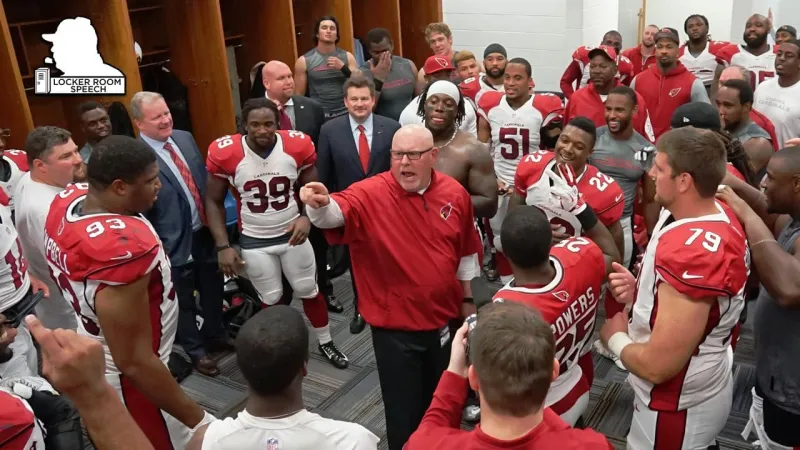
Photo: NFL coach whiteboard halftime locker room speech, via static.clubs.nfl.com
There's a moment in every blowout where the losing team disappears into the tunnel and the winning team starts doing math. Twelve-point lead. Twenty minutes left. This one's over, right?
Wrong. At least, not always.
Some of the most electric sports moments in recent memory didn't happen on a buzzer-beater or a walk-off swing. They happened in a locker room at halftime, when a coach scrawled something on a whiteboard, said the right thing at the right volume, and sent a completely different team back onto the field. The comeback nobody saw coming often starts somewhere nobody can see at all.
More Than X's and O's
When analysts break down halftime turnarounds, the conversation usually goes straight to scheme. Did the defense switch to zone? Did the offense slow the tempo? Those things matter — but coaches and sports psychologists who study these moments will tell you that the tactical stuff is almost secondary to what happens emotionally in those twelve to fifteen minutes.
"The biggest mistake a struggling team can make at halftime is spending the whole break talking about what went wrong," said one NFL offensive coordinator who has been part of multiple second-half comebacks. "You've got about four minutes of useful correction time before guys start checking out mentally. The rest of that time has to be about belief."
That belief piece is harder to manufacture than a blitz package. It requires a coach who reads the room before reading the stat sheet — someone who knows whether their team needs a fire-and-brimstone speech or a calm, measured reset. Get it wrong, and you can actually make a bad first half worse.
The Tactical Flip
Of course, the Xs and Os still matter enormously. And the best halftime adjustments tend to share a few common threads.
Defensive scheme shifts are usually the most immediate fix available. A team getting torched on the perimeter in the first half can tighten up with a zone look that forces opponents to rethink their entire offensive approach. In the NBA, switching from man-to-man to a drop coverage on pick-and-rolls has rescued teams from double-digit deficits more than once. In football, bringing an extra safety into the box to stop a dominant run game can completely change what an offense is willing to try.
Offensive tempo changes are equally powerful. A team that spent the first half playing fast and turning the ball over can slow things down, run clock, and force the leading team to play defense longer than they'd like. Conversely, a team that was playing too cautiously — trying to protect a lead that evaporated anyway — can open the throttle and start playing with the aggression that got them there in the first place.
The 2023 NFL playoffs gave fans a textbook example when several teams came out of halftime looking almost unrecognizable from the squad that walked in. Coordinators who had been predictable in the first half started mixing formations, motioning receivers in ways they hadn't shown on film, and catching defenses completely off guard. The teams that lost those games didn't necessarily play worse in the second half — they just never adjusted to what was coming at them.
The Psychological Reset Button
Beyond the clipboard, there's the conversation. And this is where coaching genius gets genuinely hard to quantify.
Some coaches use halftime to single out individual players who need a confidence boost. Others make it entirely about the collective — stripping away individual stats and refocusing everyone on a single shared goal. The best coaches seem to have an almost instinctive read on which approach the moment demands.
Sports psychologists have noted that teams coming back from large deficits often share one key mental trait: they stop thinking about the scoreboard and start focusing on the next possession, the next play, the next at-bat. Breaking a fifteen-point deficit into a series of five-point problems is a mental trick, but it's a powerful one. And it almost always starts with something a coach said in that locker room.
"Players perform better when the task feels achievable," one performance consultant who works with professional sports teams explained. "A coach who walks in and says 'we're going to win this game' when you're down eighteen points can actually hurt the team. A coach who says 'let's make it a ten-point game by the end of the third quarter' gives everyone something concrete to chase."
When It All Comes Together
The greatest second-half turnarounds in recent American sports history tend to involve all of these elements firing at once. The Super Bowl LI comeback — New England erasing a 28-3 deficit against Atlanta — remains the gold standard, and it wasn't one thing that made it happen. It was defensive adjustments that started forcing punts, an offensive rhythm that slowly rebuilt itself, and a sideline that never once looked like it believed the game was over.
In the NBA, teams regularly engineer double-digit second-half comebacks, and the pattern is almost always the same: tighten the defense, find one player who's suddenly hot and feed them relentlessly, and let the momentum build until the other team starts pressing.
Baseball's version looks different — no halftime, but the mid-game pitching change or lineup adjustment is its own kind of tactical reset. Managers who read the game and make the right move in the fifth inning can completely flip the narrative of what looked like a lopsided afternoon.
Why It Keeps Us Watching
The halftime turnaround is one of sports' most enduring selling points, and casual fans feel it even if they can't always name what they're watching. There's something deeply satisfying about a team that refuses to accept the story the first half wrote for them.
It's also why the best coaches are worth every dollar. The tactical knowledge matters, sure. But the ability to walk into a room full of frustrated, tired athletes and convince them — genuinely convince them — that the game is still theirs? That's a skill set that goes way beyond football IQ or basketball analytics.
Some coaches have it. A lot don't. And the difference shows up in the second half, every single time.