Stop Sleeping on Defense: The Rotations and Schemes That Are Actually Winning Rings
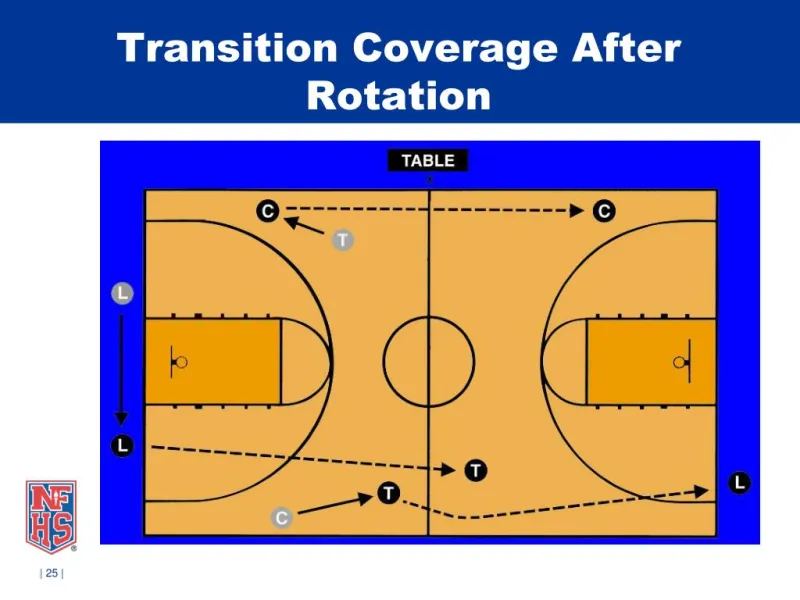
Photo: basketball defensive rotation NBA players switching coverage, via image.slideserve.com
There's a moment in almost every big game — a crucial possession in the fourth quarter, a third-and-short in the red zone, a break point in the deciding set — where everything slows down and the defense takes over. No dunks. No touchdowns. Just a perfectly executed rotation that kills a possession dead and swings momentum so hard the building shakes.
Most fans don't notice it. They're scrolling for the highlights. But coaches, players, and anyone who really pays attention know the truth: in the modern era of American sport, defense isn't just a strategy. It's the strategy.
The Offense-First Illusion
We've been conditioned to believe sports are about scoring. The NBA's pace-and-space revolution, the NFL's pass-happy spread offenses, the relentless pressure tennis — all of it pushes the narrative that the team with the most firepower wins. And sure, you need to score. But the dirty secret hiding in plain sight is that elite defenses are consistently outperforming elite offenses when the stakes are highest.
Look at the last several NBA champions. The Golden State Warriors dynasty? Built on the Draymond Green–anchored defensive switchability that made their offense possible, not the other way around. The Milwaukee Bucks' 2021 title run? Giannis Antetokounmpo was terrifying offensively, but it was their ability to clog driving lanes and force tough mid-range shots that suffocated opponents in the playoffs. And the Boston Celtics' recent dominance? Defense isn't just a piece of their game — it's the whole engine.
Boston's Blueprint: Defense as an Identity
The Celtics have become arguably the best defensive team in the league, and the way they do it is a masterclass in modern scheme design. Head coach Joe Mazzulla inherited a system built by Ime Udoka that emphasizes aggressive switching, meaning Boston's defenders constantly swap assignments to deny open looks rather than fighting through screens the traditional way.
What makes it terrifying for opponents is the versatility. When you can put Jaylen Brown on a point guard, Jrue Holiday on a wing, and Al Horford protecting the rim — all in the same possession — it creates a puzzle that even the best offensive minds in the league struggle to solve. There are no soft spots. No mismatches to hunt. Every switch is clean, every rotation is practiced to the point of muscle memory.
Critics used to say that teams relying on defense couldn't win a title because the playoffs slow down and offenses get more time to adjust. Boston's recent postseason runs have quietly demolished that argument.
The NFL's Defensive Renaissance
Over in football, the conversation is similar. The Denver Broncos built one of the most celebrated defenses in NFL history — the 2015 "No Fly Zone" unit that essentially embarrassed Cam Newton in Super Bowl 50 — on a foundation of precise zone rotations and relentless pass rush. Peyton Manning was on that roster and barely threw the ball in the Super Bowl. The defense was that dominant.
But it's not just Denver. The San Francisco 49ers under defensive coordinator DeMeco Ryans ran a scheme so sophisticated that opposing quarterbacks looked genuinely confused at the line of scrimmage. Their multiple-front system — mixing four-man rushes with three-man looks and disguising coverages until the snap — created hesitation in opposing QBs that led to sacks, turnovers, and punts at the worst possible moments for their opponents.
The common thread? All of these defenses require every player to know exactly where to be at exactly the right moment. Miss your rotation by a step and a wide receiver finds a pocket of space. Execute it perfectly and the offense has nowhere to go.
Why It's Harder Than It Looks
Here's what casual fans might not appreciate: running a complex defensive scheme is genuinely one of the hardest things to do in team sports. Offensive players know where the play is going. They have the advantage of initiation. Defenders are reacting, reading, communicating, and rotating — all in real time, against athletes who are specifically trying to make them look foolish.
Zone rotations in basketball require five players to essentially share one brain. If the ball swings to the corner and the weak-side defender doesn't rotate to the nail — that spot just inside the three-point line — the offense gets a wide-open look. If the big man hedges too far on a pick-and-roll and his guard doesn't recover, it's an easy layup. The margins are tiny.
In football, a linebacker blitzing from the wrong gap doesn't just miss a tackle — it opens a running lane for a first down or worse. Pressure packages only work when every other defender is in exactly the right position to cover the vacated space. One mistake and a designed blitz becomes a touchdown.
Defense Doesn't Go Viral — But It Wins
The reason we undervalue defense culturally is simple: it doesn't make for great social media content. A perfectly executed defensive rotation looks, to the untrained eye, like nothing happening. Compare that to a 360 dunk or a 60-yard touchdown pass and you understand why highlight packages don't spend much time on a center dropping into a zone to take away a lob pass.
But watch any championship team practice. Talk to any coach who's won at the highest level. They will tell you, almost universally, that defense travels. Offense can go cold. Shooting streaks end. Quarterbacks have bad days. Defense, when it's built on sound principles and relentless repetition, is more consistent. It doesn't need a hot hand. It just needs execution.
The Shift Is Already Happening
What's encouraging is that the sports culture conversation is slowly catching up to the reality. Analysts are spending more time breaking down coverages and rotations. Fans who go deep on the game are starting to appreciate the chess match happening on the defensive end. And players themselves — particularly in the NBA — are beginning to market their defensive reputations as a point of pride rather than something that just shows up in the box score.
Jrue Holiday built a Hall of Fame argument largely on his defensive brilliance. Bam Adebayo is celebrated as one of the game's elite defenders in a way that would have been unusual for a non-scoring big man a decade ago. The culture is shifting.
So next time you're watching a close game and the defense makes a stop that feels like it came from nowhere — a perfectly timed rotation, a coverage disguise that fooled a veteran quarterback, a zone that compressed the floor and took away every option — pay attention. That's not nothing happening. That's everything happening.
And that's what winning actually looks like.